


|
|
|
|
Introduction to The Tir Gofal Agreement Tir Gofal is the all-Wales Agri-environment Scheme, and is designed to deliver :
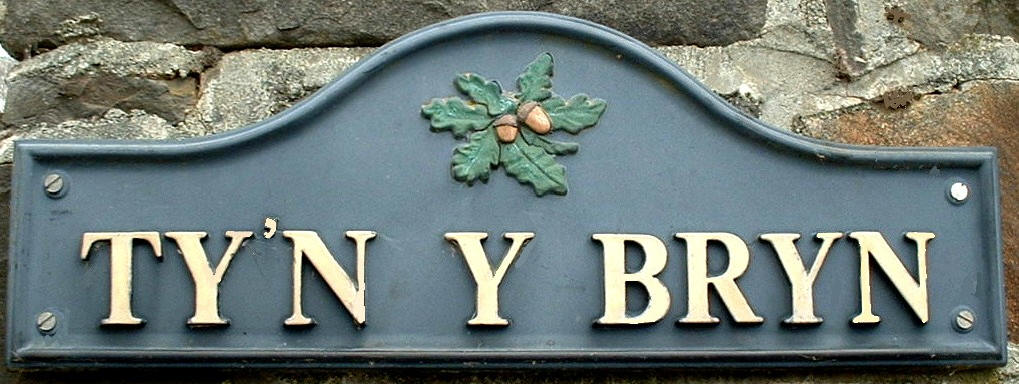
Background to TynyBryn Farms Tynybryn Farms is situated in central Montgomeryshire and comprises of four parcels of land:
Upon the Gregynog land is a Site of Special Scientific Interest known as ‘Gregynog Great Wood’; an SSSI of international importance as an example of a wood-pasture system containing many ancient trees. Of particular importance is the epiphytic lichen flora (130 species) growing on the ancient trees and the invertebrate fauna associated with dead wood and decay (18 nationally scarce species). Tynybryn Farms comprises a number of mandatory habitats including broadleaved woodland, parkland, marshy and semi-improved grasslands. A number of watercourses traverse the landholding including the Bechan Brook along with other minor watercourses and ponds. These along with the traditional field boundaries, mature trees and other landscape features add to the species diversity upon the landholding. We are very enthusiastic to manage the landholding at an ecologically sustainable level and to this end a number of voluntary options are to be undertaken upon the landholding including the establishment of buffer zones, conversion of improved parkland to semi-improved grasslands, establishment of new broadleaved woodlands and the introduction of a root crop at Ty’n-y-Bryn. The land at Ty’n-y-Bryn and Gregynog Hall parkland have numerous historic associations related to the Greynog Estate. In particular the pioneering use of concrete as a building material within the Estate and at Ty’n-y-Bryn Farm. Within the farmyard complex at Ty’n y Bryn are a range of Grade II listed weatherproof traditional agricultural buildings. The Clwyd-Powys Archaeological Trust HE–2 report contains a number of historic and landscape features upon Tynybryn Farms, in particular the Gregynog land including a parcel of land known as ‘Gregynog Hall rabbit warren’, Gregynog Hall parkland and evidence of a number of post medieval building sites, pond, quarry and spoil heaps. Habitat Management and Stocking Rates
All of the stocking rates shown in this Tir Gofal Management Plan are average rates per hectare per year, unless otherwise stated. Exceptions to the general rule usually apply in areas such as saltmarsh, where breeding birds may be present. In such cases the rates are quoted as no more than a maximum LSU per hectare at any one time.
Notwithstanding the use of average rates per hectare per year, all agreement holders will be expected to undertake the specific grazing regimes for the particular habitats present on their land. In many cases these regimes will closely resemble existing practice. However, the rules of the Scheme preclude exceeding 4 x the average annual rate, e.g. if the average rate is 1.0 LSU per ha per year, it will only be possible to graze 4 LSU for three months in the year.
Wherever appropriate, the prescribed average stocking rate has been interpreted by the Project Officer to give a specific grazing regime for a habitat or a grazing block; and the grazing plan agreed with the Applicant is included either with the relevant habitat prescriptions or in a Grazing Plan that may be present in the form of an appendix.
The following conversions apply when calculating stocking rates:
No other types of stock are to be used on listed habitats without the written approval of the project officer. It is perfectly acceptable, however, to graze other livestock such as pigs, chickens, goats, deer etc on improved land - always provided this land has not been entered into one of options. THE WHOLE FARM SECTION
All participants in the Scheme are required to comply with a series of environmental measures which will apply to the whole farm. The Whole Farm Section seeks to ensure that the management of land entered into the scheme is compatible with good environmental practices. In particular it aims to protect landscape, wildlife and historic features and provide new access to the public.
The basic components of the Whole Farm Section are detailed below.
LANDSCAPE FEATURES.
Field Boundaries.
i. Scheme participants must retain all existing traditional boundaries including hedges, dry stone walls, earth banks, slate fences, stone gate posts and stone and ladder stiles.
ii. Traditional boundaries which are stock-proof at the time of entering into an agreement must be maintained in a stock-proof condition using locally appropriate traditional materials.
iii. At least 25% of the hedges on land under agreement must be left untrimmed in any one year, apart from those alongside roads, which may require annual trimming to comply with legal requirements. Detailed hedgerow management guidelines are included in this plan on page 31. Trees. i. Individual trees and small groups of trees must be retained. Dead trees must be retained unless they cause a hazard or obstruction. Where possible the farmer/land manager should encourage natural regeneration to replace lost trees, otherwise replanting should be undertaken with saplings of local provenance.
Damage to trees and associated plants and animals, e.g. by pesticide or herbicide drift, must be avoided.
ii. If felling trees, the necessary licences must be obtained from the Forestry Authority. You may fell up to 5 cubic metres of timber every calendar quarter as long as no more than 2 cubic metres are sold, and providing there are no other restrictions in place i.e. Tree Preservation or Conservation Area Planning Orders.
Historic/Traditional Landscape Features. Please refer to The Clwyd-Powys Archaeological Trust, Tir Gofal Historic Environment report – HE-2 which provides a check list and outline management recommendations for the historic features and archaeological sites upon your landholding.
i. Historic sites and features are important components of the landscape. They must not be damaged or destroyed. They must be safeguarded from damage by stock, vehicles, cultivation or land reclamation works; trees should not be planted on these sites and no stones should be removed for any purpose including walling or building renovation work.
ii. Traditional buildings are important landscape features. Those which are weatherproof and structurally sound must be maintained in a weatherproof condition. Traditional buildings or parts thereof which have not been modified must be maintained using traditional materials in keeping with the local character.
There are a number of historic and traditional buildings within the ‘farmyard’ area. N.B. Consult your project officer and/or Clwyd-Powys Archaeological Trust officer prior to commencing any restoration works on the traditional agricultural building for guidance and a building specification. Bat roosts are protected through out the year even if you think that bats are not present, you should contact CCW before commencing any works, which could harm the roost.
iii. Semi - traditional buildings, which have been modified can be maintained using compatible materials to ensure local character is maintained.
iv. Other traditional sound and well maintained landscape features, e.g. sheep-folds, sheep pounds and stone slab bridges must be similarly maintained.
v. The use of metal detectors on agreement land must be in accordance with the Treasure Act 1996.
Rock Features and Landforms.
i. Geological features and landforms must be protected from damage. There should be no extraction of rock, scree, sand, shingle, gravel, clay or peat other than with the agreement of the project officer.
ii. A two metre buffer zone around rock features must be maintained whilst observing the same prescriptions as given for field boundary buffer zones.
Rubbish.
The farm should be kept free from rubbish, litter, derelict machinery and equipment. Whenever possible all bale wrappings and other plastics should be recycled through an approved outlet.
FIELD BOUNDARY BUFFER ZONES.
A one metre buffer zone to all field boundaries measured from the base of the hedge, earth-bank, wall or slate fence should be maintained. There should be no ploughing or cultivating and none of the following must be applied to the field boundary or to the buffer zone:
C Lime or other substance to alter soil acidity;
C Inorganic or organic fertiliser;
C Pesticides;
C Herbicides - except where carrying out selective treatment of nettles, spear thistle, creeping thistle, curled dock, broad-leaved dock, ragwort, Japanese knotweed, rhododendron or Himalayan balsam, using spot treatment or weed wiper. Other heavy infestations of problem weed species may be controlled where necessary following consultation with the project officer.
WATER FEATURES.
i. All water features such as ponds, lakes, streams and ditches must be maintained and should be protected from damage. Poaching and stock damage to banks, except watering places agreed beforehand with the project officer, must be avoided.
ii. Participants in the Scheme must not apply any fertilisers, off farm wastes, lime, pesticides or any other chemicals within 1 metre of water features. Neither can farm yard manure or slurry be applied within 10 metres of water features. Avoid poaching by stock or stock feeding in locations where this will cause pollution of water features.
iii. Non-native plants, fish or other species of birds and animals must not be introduced.
iv. Pollution of waters (surface water, underground aquifers and cave systems) should be avoided. The control of pollution as required by the Water Resources Act and the Land Drainage Act 1991 must be adhered to.
STOCKING RATE.
i. Overall stocking levels on land subject to agreement should not be increased above the levels carried in 1998 unless it is necessary to achieve agri-environmental objectives of the scheme. ii. The Tir Gofal guidelines may require stock reduction on, or exclusion of animals from, some habitats and features on the farm. Any surplus stock should normally be removed from the land under agreement within six months, but exceptionally it may be possible to accommodate some of the surplus stock on improved grassland. In such cases this must not result in environmental damage from overstocking.
NON-NATIVE SPECIES.
Scheme participants must not introduce any non-native animal or plant species to land subject to agreement, other than by agreement with the project officer.
ANIMAL WELFARE.
The guidelines and regulations in relation to animal welfare and the protection of wild birds, animals and plants must be followed.
CODES OF GOOD AGRICULTURAL PRACTICE.
Scheme participants are expected to operate their business in accordance with the advisory elements of the Codes of Good Agricultural Practice and must comply with the Codes of Good Farming Practice as issued by the National Assembly for Wales.
ACCESS.
i. Scheme participants must agree to allow public access on foot to unenclosed moorland, heathland and grassland.
ii. Access to reach these areas may be by means of Public Rights of Way where they exist, or by the creation of new permissive footpaths volunteered by Scheme participants. Any overriding agricultural, safety or environmental considerations which necessitate the temporary closure of a permissive footpath or access area will need to be agreed with the project officer.
iii. The agreement holder’s legal responsibilities relating to existing Public Rights of Way which cross the land must be complied with. This includes keeping them free from obstruction and re-instating them after ploughing.
LEGAL REQUIREMENTS.
Scheme participants must comply with all relevant legal requirements, both in force when entering an agreement and which may come into force during the period of the agreement and will be responsible for obtaining any necessary consents, e.g. planning permission. Any land within the Gregynog Great Wood Site of Special Scientific Interest (SSSI) is still protected under the Wildlife and Countryside Act 1981 as substituted by Schedule 9 to the Countryside and Rights of Way Act 2000. Any operations likely to damage the special interests of the SSSI that are not covered by this Tir Gofal agreement will need to be referred to the local Countryside Council for Wales office for consent. CONSULTATION
Agreement must be obtained from the project officer in respect of proposals to undertake any of the following:
C Erecting new buildings or significantly altering existing buildings, or modifying traditional buildings, other than the farmhouse;
C Constructing tracks, roads, yards or hard-standings;
C Constructing new hedges, walls, fences or banks
C Realigning, dredging or damming watercourses; creating new, or increasing the level of, existing water abstraction or altering the level of a water feature;
C Moving or quarrying stone (including isolated boulders), scree, sand, shingle, gravel, clay or peat;
C Using the land, or open water within the agreement holder’s control, for organised and/or commercial sporting or recreational activities which may be in conflict with the Scheme;
C Clearing any areas of scrub, tree felling, or planting of trees and any work in woodland not included within the Woodland Grant Scheme agreement;
C The control of bracken;
C Excavating or depositing spoil on land or disposing of any off farm wastes;
C Location of new hay or silage feeding sites.
MANDATORY CATEGORIES
SEMI-NATURAL BROADLEAVED WOODLAND
Location and Description
Gregynog Land The area identified on map 2 G9 is a narrow strip of mixed broadleaved woodland being situated along a stream-bank adjoining semi-improved neutral grassland. The woodland species comprise predominately ash with some rowan, oak and willow.
Environmental Objectives
Encourage growth of the native trees, shrubs and ground living plants typical of lowland mixed broadleaved woods.
Manage for sustainable timber production where appropriate.
Retain a short sward and closed woodland structure of benefit to mosses and other lower plants as well as birds such as pied flycatcher and redstart.
Allow for the development of a plentiful supply of dead standing timber. This will benefit hole nesting birds, lichens and fungi as well as insects and other invertebrates.
Management Prescriptions
C Within 12 months of entering the Scheme, agree with the Project Officer a programme of management work designed to enhance the environmental, economic and, where appropriate, the recreational value of the woodland. A suitable programme may be put forward for funding under the Woodland Grant Scheme and is likely to include some of the following:
- Singling of multi-stemmed coppice regrowth - Small scale group felling of canopy trees - Coppicing of hazel and other shrubs such as willow, birch and alder - Prolonging the life of old pollard trees by tree surgery (for which Tir Gofal Capital Works payments are available) - Details of any extraction routes and methods of brash disposal - Removal of invasive species such as rhododendron (for which Tir Gofal Capital Works payments are available) - Any control of deer, grey squirrels, rabbits and/or feral goats (for which Tir Gofal Capital Works payments are available as a Special Project) - Management of any woodland glades or rides - Timing of all management works - Provision of any recreational access facilities - Location of any fencing or walls necessary to control livestock or deer
C All livestock must be excluded for the duration of the agreement.
However, the Project Officer may issue written approval for the use of stock at a rate not exceeding 0.4 LSU/ha/yr in order to control bramble and enhance seedling establishment. Any approvals will be time limited. C Retain all ancient trees and allow for the development of a plentiful supply of dead standing timber. Fallen dead timber should be left on the ground.
C Retain all trees known to support bat roosts or nesting sites for birds of prey. Seek further advice from the Project Officer before starting work in woodlands with other protected species such as red squirrel, dormouse and badger.
C Do not install any new drains or open out any existing drains without prior approval from the Project Officer.
C Do not install any new tracks without prior approval.
C Do not apply any inorganic or organic fertilisers such as farmyard manure, slurry, sewage sludge or chicken manure.
C Do not apply any basic slag, lime, calcified seaweed, waste paper sludge or other off farm wastes.
C Do not supplementary feed any livestock.
C Do not use any herbicides or pesticides without prior approval.
C Do not burn any vegetation without prior approval.
C Do not introduce any non-native plants or animals.
C Do not use any machinery without prior approval from the Project Officer.
SEMI-NATURAL BROADLEAVED WOODLAND Lightly Grazed
Location and Description
Gregynog Land The area identified on map 2 as F4 is a mixed broadleaved woodland comprising predominantly of oak and ash with some beech.The areas identified on map 2 as N8 and N9 upon The Warren are planted parkland oak woodlands with sycamore and ash present and an understorey comprising of dog violet, dogs mercury and wood sorrel.
Church House Land
Environmental Objectives
Encourage growth of the native trees, shrubs and ground living plants typical of mixed broadleaved woodlands.
Manage for sustainable timber production where appropriate.
Encourage a varied age structure comprising open glades and areas of naturally regenerating woody species as well as mature woodland and individual ancient trees.
Retain a short sward and closed woodland structure of benefit to mosses and other lower plants as well as birds such as pied flycatcher and redstart.
Allow for the development of a plentiful supply of dead standing timber. This will benefit hole nesting birds, lichens and fungi as well as insects and other invertebrates.
Management Prescriptions
C Within 12 months of entering the Scheme, agree with the Project Officer a programme of management work designed to enhance the environmental, economic and, where appropriate, the recreational value of the woodland. A suitable programme may be put forward for funding under the Woodland Grant Scheme and is likely to include some of the following:
- Singling of multi-stemmed coppice re-growth - Small-scale group felling of canopy trees - Coppicing of hazel and other shrubs such as willow, birch and alder - Prolonging the life of old pollard trees by tree surgery (for which Tir Gofal Capital Works payments are available) - Details of any extraction routes and methods of brash disposal - Removal of invasive species such as rhododendron (for which Tir Gofal Capital Works payments are available) - Any control of deer, grey squirrels, rabbits and/or feral goats (for which Tir Gofal Capital Works payments are available as a Special Project) - Management of any woodland glades or rides - Timing of all management works - Provision of any recreational access facilities - Location of any fencing or walls necessary to control livestock or deer
C Stock at a rate not exceeding 0.05 LSU/ha/yr (dry woods) C In line with SSSI management of Gregynog Great Wood, stock at a rate not exceeding 0.40 LSU/ha/yr
However, the Project Officer may issue written approval for the use of stock at a rate not exceeding 0.4 LSU/ha/yr in order to control bramble and enhance seedling establishment. Any approvals will be time limited.
C Retain all ancient trees and allow for the development of a plentiful supply of dead standing timber. Fallen dead timber should be left on the ground.
C Retain all trees known to support bat roosts or nesting sites for birds of prey. Seek further advice from the Project Officer before starting work in woodlands with other protected species such as red squirrel, dormouse and badger.
C Do not install any new drains or open out any existing drains without prior approval from the Project Officer.
C Do not install any new tracks without prior approval.
C Do not apply any inorganic or organic fertilisers such as farmyard manure, slurry, sewage sludge or chicken manure.
C Do not apply any basic slag, lime, calcified seaweed, waste paper sludge or other off farm wastes.
C Do not supplementary feed any livestock.
C Do not use any herbicides or pesticides without prior approval.
C Do not burn any vegetation without prior approval.
C Do not introduce any non-native plants or animals.
C Do not use any machinery without prior approval from the Project Officer.
SEMI-NATURAL BROADLEAVED WOODLAND Grazed Location and Description Gregynog landEnvironmental Objectives:
Encourage growth of the native trees, shrubs and ground living plants typical of upland oak wood.
Manage for sustainable timber production where appropriate.
Retain a short sward and closed woodland structure of benefit to mosses and other lower plants as well as birds such as pied flycatcher and redstart.
Allow for the development of a plentiful supply of dead standing timber. This will benefit hole nesting birds, lichens and fungi as well as insects and other invertebrates.
Management Prescriptions
C Within 12 months of entering the Scheme, agree with the Project Officer a programme of management work designed to enhance the environmental, economic and, where appropriate, the recreational value of the woodland. A suitable programme may be put forward for funding under the Woodland Grant Scheme and is likely to include some of the following:
- Singling of multi-stemmed coppice regrowth - Small scale group felling of canopy trees - Coppicing of hazel and other shrubs such as willow, birch and alder - Prolonging the life of old pollard trees by tree surgery (for which Tir Gofal Capital Works payments are available) - Details of any extraction routes and methods of brash disposal - Removal of invasive species such as rhododendron (for which Tir Gofal Capital Works payments are available) - Any control of deer, grey squirrels, rabbits and/or feral goats (for which Tir Gofal Capital Works payments are available as a Special Project) - Management of any woodland glades or rides - Timing of all management works - Provision of any recreational access facilities - Location of any fencing or walls necessary to control livestock or deer
C Stock at a rate not exceeding that used on entry to the Scheme.
However, the Project Officer may issue written approval for the use of stock at a rate not exceeding 0.4 LSU/ha/yr in order to control bramble and enhance seedling establishment. Any approvals will be time limited.
C Retain all ancient trees and allow for the development of a plentiful supply of dead standing timber. Fallen dead timber should be left on the ground.
C Retain all trees known to support bat roosts or nesting sites for birds of prey. Seek further advice from the Project Officer before starting work in woodlands with other protected species such as red squirrel, dormouse and badger.
C Do not install any new drains or open out any existing drains without prior approval from the Project Officer.
C Do not install any new tracks without prior approval.
C Do not apply any inorganic or organic fertilisers such as farmyard manure, slurry, sewage sludge or chicken manure.
C Do not apply any basic slag, lime, calcified seaweed, waste paper sludge or other off farm wastes.
C Do not supplementary feed any livestock.
C Do not use any herbicides or pesticides without prior approval.
C Do not burn any vegetation without prior approval.
C Do not introduce any non-native plants or animals.
C Do not use any machinery without prior approval from the Project Officer. SCRUB Location and Description Gregynog Land The scrub area is identified on map 2 as N7. It is situated on south facing slope upon The Warren. The scrub species comprises predominantly of mature gorse. The underlying grassland is that of unimproved grassland with foxgloves and native grasses.
Environmental Objectives
Retain and enhance existing areas of native scrub in the uplands. Encourage the spread of such scrub where there is no net loss of more valuable habitats of features.
Manage existing areas of lowland bramble, thorn, gorse and willow to ensure that there is no net loss of more valuable habitats or historic features. Large stands of scrub should be treated to provide a range of age classes interspersed with small areas of open grassland.
Management Prescriptions
Note that prescriptions for other areas may also refer to scrub management where it is a component part of that habitat.
· Agree with the project officer a simple management plan covering some or all of the following: - Identification of mature stands for long-term retention. - Any coppicing or thinning. Small irregular treatments are desirable for both landscape and wildlife reasons. - Any use of stock. Graze at a rate not exceeding that set for the underlying grassland.
· Do not extract any cut stumps or use any methods other than hand cutting without prior approval from the project officer.
· Do not install any new tracks without prior approval.
· Do not supplementary feed any livestock without prior approval.
· Do not install any new drains or open out any existing ditches without prior approval from the project officer.
· Do not apply any inorganic or organic fertilisers such as farmyard manure, slurry, sewage sludge or chicken manure.
· Do not apply any basic slag, lime, calcified seaweed, waste paper sludge or other off farm wastes.
· Seek further advice from the project officer before starting work in scrub known to support protected species such as dormouse or badger.
PARKLAND Semi-improved Location and Description Gregynog Land These fields have been identified as parkland in the CADW/ICOMOS UK advisory publication for Powys entitled Register of Landscapes, Parks and Gardens of Special Historic Interest in Wales.
The species content varied from field to field. There was less species diversity within field A1 with tufted hair-grass, rush and sedge species; within fields E2 and F1 sweet vernal, birdsfoot trefoil, crested dogstail, marsh bedstraw, Yorkshire fog, creeping bent and soft rush were present and within fields N1, N5, N6 and N11 as well as those species mentioned above were eyebright, cats-ear and autumn hawkbit.
Agricultural modification had been undertaken in the past, shown by the presence of species indicative of nutrient-enrichment and partially drained situations such as common mouse-ear chickweed, white clover, yorkshire fog and soft rush.
Environmental Objectives
Encourage the development of a diverse habitat and landscape feature comprising specimen broadleaved and exotic trees, together with replacement saplings and lightly grazed pasture.
Retain the characteristic features of less intensively managed parkland such as ancient trees and dead wood. This will benefit hole nesting birds as well as lichens, fungi, insects and other invertebrates.
Ensure that any replacement planting is in keeping with existing landscape character and the historic value of the site.
Management Prescriptions
· Maintain of patches of brambles.
C Manage individual clumps of trees. See Forest Authority Woodland Grant Scheme
C Retain all ancient trees and allow for the development of a plentiful supply of dead standing timber. Fallen dead timber and any cut material should be retained in-situ or moved to a semi-shaded area nearby. Where cut timber has to be removed off site, this should take place immediately after felling to avoid colonisation by insects or other invertebrates.
C Do not plough, cultivate or re-seed unless the land is already managed as part of an arable rotation.
C Do not install any new drainage. Obtain prior approval from the Project Officer before clearing out existing drains.
C On grassland sites, do not use any herbicides or pesticides, other than for spot treatment of notifiable weeds, without prior approval from the Project Officer. Cutting is an acceptable method of weed control.
C Do not increase application rates of organic or inorganic fertiliser above the levels applied on entry to the Scheme. Do not apply any organic fertilisers other than farmyard manure and avoid spreading in close proximity to trees.
In the case of this agreement, the specified levels are: Outline application rates of organic or inorganic fertiliser applied on entry to the Scheme
C Do not apply any waste paper sludge or other off farm wastes. Obtain prior approval from the Project Officer before applying any lime (calcium carbonate), basic slag or calcified seaweed, which will require a soil analysis to be undertaken.
C Do not burn any vegetation.
C Do not supplementary feed or install new watering troughs without prior approval from the Project Officer.
C Maintain the vegetation by light grazing with cattle, horses or sheep at a rate not exceeding 1.0 LSU/ha/yr on neutral grasslands.
PARKLAND Improved Location and Description Gregynog Land These enclosures have been identified as parkland in the CADW/ICOMOS UK advisory publication for Powys entitled Register of Landscapes, Parks and Gardens of Special Historic Interest in Wales.
Whilst the grassland species within these enclosures are dominated by agricultural species, there was evidence of native species in particular along and around the watercourses including meadow-sweet and branched bur-reed.
Environmental Objectives
Encourage the development of a diverse habitat and landscape feature comprising specimen broadleaved and exotic trees, together with replacement saplings and lightly grazed pasture.
Retain the characteristic features of less intensively managed parkland such as ancient trees and dead wood. This will benefit hole nesting birds as well as lichens, fungi, insects and other invertebrates.
Ensure that any replacement planting is in keeping with existing landscape character and the historic value of the site.
Management Prescriptions
C Maintain of patches of brambles.
C Retain all ancient trees and allow for the development of a plentiful supply of dead standing timber. Fallen dead timber and any cut material should be retained in-situ or moved to a semi-shaded area nearby. Where cut timber has to be removed off site, this should take place immediately after felling to avoid colonisation by insects or other invertebrates.
C Do not plough, cultivate or re-seed unless the land is already managed as part of an arable rotation.
C Do not install any new drainage. Obtain prior approval from the Project Officer before clearing out existing drains.
C On grassland sites, do not use any herbicides or pesticides, other than for spot treatment of notifiable weeds, without prior approval from the Project Officer. Cutting is an acceptable method of weed control.
C Do not increase application rates of organic or inorganic fertiliser above the levels applied on entry to the Scheme. Do not apply any organic fertilisers other than farmyard manure and avoid spreading in close proximity to trees. C Do not apply any waste paper sludge or other off farm wastes. Obtain prior approval from the Project Officer before applying any lime (calcium carbonate), basic slag or calcified seaweed which will require a soil analysis to be undertaken.
C Do not burn any vegetation.
C Do not supplementary feed or install new watering troughs without prior approval from the Project Officer.
C Maintain the sward by grazing with cattle, horses, sheep or deer at a rate not exceeding 1.5 LSU/ha/yr.
SEMI-IMPROVED GRASSLANDS Location and Description Gregynog Land The two small fields identified on map 2 as G8 and H1 are neutral semi-improved pastures. The swards comprised a diverse mix of grass and flower species with fescues, Yorkshire fog, tufted hairgrass, creeping bent, red clover, devil’s bit scabious, tormentil, birdsfoot-trefoil, meadow vetchling, cat’s ear, meadow sweet, lesser spearwort. In the northern corner of enclosure H1 there were two plants of broad-leaved helleborine.
Agricultural modification had been undertaken in the past, shown by the presence of species indicative of nutrient-enrichment and partially drained situations such as common mouse-ear chickweed, white clover, yorkshire fog and soft rush.
Environmental Objectives
Encourage growth of the native plants typical of neutral soils including birdsfoot trefoil and knapweed.
Encourage growth of the native plants typical of neutral soils including bird’s foot trefoil and knapweed
Discourage growth of weed species and those characteristic of more fertile soils such as creeping thistle, curled dock, perennial ryegrass and white clover.
Maintain small-scale features including occasional scrub and small patches of bare ground since these are of value to a wide range of wildlife, especially insects and other invertebrates.
Management Prescriptions
C Do not plough, cultivate or re-seed.
C Do not roll or chain-harrow on land used by ground nesting birds without prior approval from the Project Officer. Retain ant hills unless taking a hay crop.
C Do not install any new drainage. Obtain prior approval from the Project Officer before clearing out existing ditches.
C Do not use any herbicides or pesticides, other than for spot treatment of notifiable weeds, without prior approval from the Project Officer. Cutting is an acceptable method of weed control.
C Do not apply any inorganic fertilisers. Well rotted farmyard manure (stored for at least twelve months) may be applied at a rate of no more than 10 tonnes/ha every other year provided prior approval has been obtained from the Project Officer.
In exceptional circumstances, where FYM is unavailable, organic-based bagged fertiliser may be applied at a rate not exceeding 18.5 kg/ha of N; 8.5 kg/ha of P and 8.5kg/ha of K, provided prior approval has been obtained from the Project Officer. All receipts must be retained for inspection. No other organic fertilisers including slurry, sewage sludge, chicken manure and fish meal are acceptable.
C Do not apply any basic slag, calcified seaweed, waste paper sludge or other off farm wastes. Obtain prior approval from the Project Officer before applying any lime (calcium carbonate), which will require a soil analysis to be undertaken.
C Do not burn any vegetation.
C Do not supplementary feed without prior approval from the Project Officer.
C Agree with the Project Officer the site of any new watering troughs.
C Maintain the vegetation by light grazing with cattle, horses or sheep at a rate not exceeding 1.0 LSU/ha/yr on neutral grasslands and 0.75 LSU/ha/yr on acid grasslands.
C Pastures may be topped after 15 July to remove coarse growth. At least 10% of the grassland must be left uncut and the sward height should not be reduced below 10 cm. Bulky material should be removed.
MARSHY GRASSLAND Location and Habitat Description Gregynog LandThe small parcel of land identified on map 2 as F2 comprises wetland species of meadow sweet, marsh bedstraw, marsh thistle, bur-reed, lesser skullcap, sedges and soft rush.
Upon The Warren those areas identified on map 2 as N4 and N12 fall within the parkland designation with the swards comprising of predominantly Molina with marsh bedstraw, tufted hairgrass, marsh thistle, angelica, sneezewort, tormentil, common sorrel, soft and jointed rush.
Environmental Objectives
Encourage growth of the native plants typical of damp lowland including lousewort, devil’s -bit scabious, lesser spearwort and angelica soils.
Discourage growth of invasive species and those characteristic of more fertile soils such as purple moor-grass, rush and tufted hair-grass.
Prevent extensive encroachment by bracken and scrub.
Maintain small scale features including ant hills, occasional scrub and small patches of bare ground since these are of value to a wide range of wildlife, especially insects and other invertebrates.
Management Prescriptions
C Do not plough, cultivate or re-seed.
C Do not roll or chain-harrow without prior approval from the Project Officer.
C Do not install any new drainage. Obtain prior approval from the Project Officer before clearing out existing ditches.
C Do not use any herbicides or pesticides, within 10 metres of marshy grassland unless spot treating notifiable weeds or carrying out other work approved by the Project Officer. Cutting is an acceptable method of weed control in small areas.
C Do not apply any inorganic or organic fertilisers such as farmyard manure, slurry, sewage sludge, chicken manure or fish meal within 10 metres of marshy grassland.
C Do not apply any lime, basic slag calcified seaweed, waste paper sludge or off farm wastes within 10 metres of marshy grassland.
C A simple management plan should be agreed with the Project Officer before carrying out any burning.
C The spread of rush may be controlled by topping after 15 July where required. At least 10% of the rush should be left uncut each year.
C Do not supplementary feed without prior approval from the Project Officer.
C Agree with the Project Officer the site of any new watering troughs.
C Maintain the vegetation by light grazing with cattle, horses or sheep at a rate not exceeding 0.4LSU/ha/yr. Obtain prior approval from Project Officer before using sheep.
C Avoid localised overgrazing or under-grazing by shepherding on large sites.
PRESCRIPTIONS AND OPTIONS ON WHOLE FARM SECTION FEATURES
HEDGEROWS Location and Description A number of hedgerows of varying age structure and size exist on the whole landholding. A programme of restoration will be undertaken being mindful to retain a diverse range of age, size and structure of hedgerows upon the landholding.
Environmental Objectives
Maintain the character of the local landscape by conserving and enhancing historic field patterns.
Manage living field boundaries to benefit a variety of wildlife including plants, small mammals and birds as well as insects and other invertebrates.
Maintain existing hedges that assist with the management of stock and provide shelter in bad weather.
Restore derelict hedges and establish new hedgerows where appropriate.
Management Prescriptions
C Do not remove any parts of existing hedgerows or earth banks even where these are in a derelict condition.
C Where regular trimming is necessary, cut on a rotation so that no more than three-quarters of the hedges on the farm are treated in any one year. Carry out trimming between 1 December - 15 March wherever possible and do not trim between Mid March and 15 July.
C Do not use tractor mounted flails to trim hedges with a stem diameter exceeding 2.5cm (1"). Mark and allow to grow on to maturity sufficient saplings to replace existing mature trees and/or increase the number of standards to 2 or 3 per 100m. C Do not apply any insecticides, lime, in-organic or organic fertilisers to a strip extending 1m from the base of the field boundary. Do not apply any herbicides, with the exception of spot treatments to control nettles, creeping thistle, spear thistle, curled dock, broadleaved dock, ragwort and japanese knotweed. Do not plough or cultivate within this buffer zone. C Do not remove any hedgerow trees exceeding 10cm (4") stem diameter at breast height without prior approval from the Project Officer. A Forestry Authority felling licence may also be required. C Remove from the hedge all old fencing residues, scrap and other rubbish. Repair resulting small gaps by laying and/or replanting with stock of local provenance. .
C Allow occasional relict hedges to grow on into lines of mature shrubs and/or shelterbelts as agreed with the Project Officer.
C Retain any dead trees unless they constitute either a hazard or an obstruction.
C Do not site new troughs or feeding areas in such a way as to cause damage to field boundaries. Manage livestock so as to prevent poaching of earth banks or damage to woody shrubs.
C Do not create any new gateways or other openings without prior approval from the Project Officer. New exits onto Highways may also require consent from the local authority.
Restoration Prescriptions
Details of all hedges and earth banks to be restored are shown on Map 3 of the agreement and in the Capital Works programme.
In addition the following should be adhered to: - Hedges should be laid in the local style. - Where coppicing is necessary (stems over 5" - 6" diameter) cut hedgerow shrubs 2" - 3" above ground level, on a clean and angled slant to allow for water run-off. - Pollarding and/or removal of any unstable trees. - Replanting of native trees and shrubs. Use stock of local provenance and do not introduce new species into any ancient and/or species-rich hedges as identified by the Project Officer. - Aftercare of newly established plants including a layer of mulch following planting and in subsequent years to suppress weed growth and to retain moisture; herbicide use where appropriate. - Identification of saplings with the potential to grow on into hedgerow trees. - Repair of eroded or otherwise damaged hedge banks. - Any necessary protective fencing together with associated wooden gates and stiles. - Eradication of any invasive species such as japanese knotweed. - Timing of works. Carry out work between 1 October - 15 March wherever possible
C Retain all trees known to support bat roosts or nesting sites for birds of prey. Seek further advice from the Project Officer before working on hedges supporting protected species such as badger or dormouse.
C Avoid burning any brash close to the hedge nor within any habitat nor voluntary option land.
STONE WALLS, SLATE FENCES, STONE FACED AND OTHER EARTH BANKS Environmental Objectives Maintain the character of the local landscape by conserving and enhancing historic field patterns. Manage existing walls, slate fences and banks to benefit a variety of wildlife including plants, small mammals and birds as well as insects and other invertebrates.
Maintain field boundaries that assist with the management of stock and provide shelter in bad weather.
Restore derelict field boundaries and establish new features where appropriate.
Management Prescriptions.
C Do not remove any parts of existing walls, slate fences, stone faced or other earth banks even where these are in a derelict condition. Do not remove stone from relict field boundaries without prior approval from the Project Officer.
C Maintain stock-proof field boundaries in the local style by replacing any loose stones and/or slates as well as repairing any areas of poaching on earth banks.
C Maintain, using traditional materials and local styles of work, all existing stone structures associated with the field boundary including stiles, gate posts, sheep pounds and sheep creeps.
C Remove any metal sheeting and old fencing residues and repair any resulting gaps with traditional materials.
C Do not apply any insecticides, lime, in-organic or organic fertilisers to a strip extending 1m from the base of the field boundary. Do not apply any herbicides, with the exception of spot treatments to control nettles, creeping thistle, spear thistle, curled dock, broadleaved dock, ragwort and japanese knotweed. Do not plough or cultivate within this buffer zone.
C Do not remove any trees exceeding 10cm (4") stem diameter at breast height without prior approval from the Project Officer. A Forestry Authority Felling Licence may also be required.
C Do not site new troughs or feeding areas in such a way as to cause damage to field boundaries. Manage livestock so as to prevent poaching of earth banks.
C Do not create any new gateways or other opening without prior approval from the Project Officer. New exits onto Highways may also require consent from the local authority.
C Do not rebuild any ancient, relict or abandoned stone walls or slate fences without the consent of the Project Officer.
C Keep all existing jump fencing in good repair.
C Seek further advice from the Project Officer before starting work on field boundaries supporting protected species such as badger.
CONSERVATION OF HISTORIC EARTHWORKS AND STONE STRUCTURES Location and Description
Please refer to the Clwyd-Powys Archaeological Trust report (C-PAT TG ref:1017 ) entitled Tir Gofal Historic Environment – HE-2 Report for the outline management recommendations for the historic features and archaeological sites upon the landholding.
Environmental Objectives
Prevent scrub and bracken encroachment and maintain an even cover of low growing vegetation.
Management Prescriptions
C Do not plough or cultivate without prior approval from the Project Officer.
C Do not plough or cultivate in adjacent areas where this will cut into the surface profile of earthworks or damage stone structures.
C Do not install any new drainage or underground services.
C Maintain a stocking regime that prevents any poaching or erosion.
C Do not site feeding areas or new water troughs on earthworks or next to stone structures.
C Do not remove or clear stone from historic stone structures or the surrounding area.
C Do not site new fencing or vehicular tracks on earthworks or next to stone structures. Avoid moving heavy plant or machinery over such features.
C Maintain an even cover of low growing vegetation.
C Manage woodland and individual trees by removing any dead or unstable timber from the vicinity of earthworks and stone structures. Infill all craters in earthworks resulting from wind-throw trees brought down during the agreement. Agree with the Project Officer an appropriate source of material before starting work.
C Do not dump stone or other spoil onto earthworks or stone structures.
C Ensure that any rabbits are kept under control.
C Remove all scrap and other man-made rubbish.
C Do not plant any trees without prior approval. GRASSLAND RESTORATION OPTIONS
CONVERSION OF IMPROVED GRASSLAND TO SEMI-IMPROVED GRASSLAND Parkland to Pasture Location and Habitat Description Gregynog Land The two areas upon The Warren identified on map 2 as N2 and N3 are improved parkland pastures which are to be converted to semi-improved parkland pastures.
The swards within the above areas did show signs of some floristic diversity in particular at the inter-face with the semi-improved parkland grasslands which adjoin both N2 and N3. The two areas will be cropped for hay for the first three years with the adjoining grassland habitats to be used as a seed source by livestock.
Environmental Objective
Enhance the landscape, historic and recreational value of parkland.
Management Prescriptions
C Maintain the grassland without using any inorganic or organic fertilisers including FYM.
C It is not acceptable to apply any lime or any off farm wastes.
C Seek prior approval from the Project Officer before applying any herbicides or other pesticides.
C For each of the first three years of the agreement, it is essential to take a hay crop. Cut after date post 15 July.
C The stocking rate must not exceed 0.75LSU/ha/yr.
BUFFER ZONES ON IMPROVED LAND ADJACENT TO PONDS, LAKES, STREAMS AND FIELD DITCHES Location and Habitat Description Gregynog land The areas identified on map 2 as G3 and G4 are areas of improved land upon which buffer zones are to be established adjacent to open ditches and streams.Environmental Objectives
Encourage the development of a diverse habitat and the growth of native plants alongside watercourses and areas of open water.
Enhance water quality by reducing the input of nutrients, pesticides and sediment from surrounding farmland.
Prescriptions
C Apply the following prescriptions to selected strips of improved grassland and/or arable land. Buffer zones must extend from the edge of the water feature for at least 6 metres in width beyond the 1 metre wide strip protected under the Whole Farm Code. C In the case of this agreement the width of the buffer zone will be six metres beyond the one metre whole farm code zone (seven metres in total). Due to the meandering nature of the watercourses the buffer zone width will be no less than seven metres.
C Do not plough, cultivate or re-seed.
C Do not apply any inorganic or organic fertilisers.
C Do not install any new drainage or clear out existing ditches.
C Farmyard manure, slurry, sewage sludge and other manures must not be applied to the buffer strip or within 10 metres of any watercourse or open water feature.
C Do not use any herbicides or other pesticides, other than for spot treatment of notifiable weeds, without prior approval from the Project Officer.
C Do not apply any basic slag, calcified seaweed, waste paper sludge or other off farm wastes.
C Do not apply any lime (calcium carbonate), which will require a soil analysis to be undertaken, without prior approval from the Project Officer.
C Do not carry out any supplementary feeding.
C Do not locate any water troughs within the buffer zone.
ACCESS OPTIONSCREATE NEW PERMISSIVE ACCESS AREAS Location and DescriptionGregynog LandThis land excluding Gregynog Great Wood SSSI is to be entered into this option thus providing the public with the opportunity to walk, picnic freely and study nature in all the green hatched enclosures where previously no such provision existed.
The enclosures are situated on the outskirts of Tregynon. The enclosures are currently used by both tourists and locals alike for access and sight seeing.
This new access area will be potentially popular, useful and scenically attractive; it will complement the existing public rights of way network upon the landholding and within the locality.
Environmental Objectives
Provide new access to areas of enclosed land for walking, picnicking and nature study compatible with the nature of the site and surrounding land uses.
Provide new access to water features and archaeological and historic sites
“Land shown in this agreement as voluntary option 44D (permissive area access) may subsequently become ‘access land’ as defind in Part 1 of the Countryside and Rights of Way Act 2000. If and when such land becomes ‘access land’, payment allocated under voluntary option 44D will be withdrawn on the next anniversary of the agreement. The Countryside and Rights of Way Act will require that public access must continue to be provided free of charge to the area in question and according to the terms of that Act.”
Environmental Objectives
Provide new access to areas of enclosed land, for walking, cycling, horse riding, orienteering, rock climbing, picnicking, nature study or any other activities compatible with the nature of the site and surrounding land uses.
Provide new access to viewpoints, woodlands and water features as well as archaeological and historic sites
Management Prescriptions
C Make areas of enclosed land available to the public for new access opportunities. As a minimum, the public must be able to walk, study nature and picnic freely in these areas.
C Where required, provide new gates, bridges, signposts and waymarks to the specification set out by the Project Officer. Maintain all such fittings in a safe and usable condition.
C Provide suitable picnic sites. Maintain all such fittings in a safe and usable condition.
C Operate a suitable system to administer bookings, permits etc if required for specific activities. Keep a simple record of this and provide the Project Officer with a copy in each year of the agreement.
C Ensure that you have adequate public liability insurance to cover all parts of the holding identified in your agreement.
C Allow the public to use all specified areas free of charge.
C Keep all permissive access areas clear of rubbish and litter. (Litter bins should not be provided).
C Where agricultural or environmental reasons make it essential to close a permissive access area, the Project Officer must be notified at least six weeks in advance of the proposed closure. Written notices must be posted at all entry points at least four weeks before closure.
C Visitors’ dogs are required to be kept on a lead in permissive access areas. Dogs may be excluded for certain periods for agricultural or environmental reasons.
Scrub Management Plan for Gregynog land · Agree with the project officer a simple management plan covering some or all of the following: - Identification of mature stands for long term retention. - Any coppicing or thinning. Small irregular treatments are desirable for both landscape and wildlife reasons. - Any cutting of firebreaks. - Any burning.
The Scrub Management Plan Continue to manage the scrub in a similar way to present, taking account of the following: - identify mature stands of gorse and hawthorn for long term retention. - undertake periodic coppicing or thinning of a small areas (sub enclosure) within the enclosures. Areas should be cut rather than burnt, on a cyclical basis to create a variety of age structure within the scrub habitat. Small irregular treatments are desirable for both wildlife and landscape.
- actively manage one sub enclosure annually.
- where possible glades should be created and the edges of the scrub habitat scalloped to increase the scrub/grassland interface, which will be of benefit to invertebrates and birdlife. - it is permissable to manage any scrub encroaching on to the acid grassland habitat. - graze at a rate not exceeding 0.40 LSU per hectare per annum.
|
|
Send mail to
DanGJ@supanet.com with
questions or comments about this web site.
|